Q. What is Vascular System?
A. The system of arteries and veins in our body is called the vascular system. Arteries supply good blood (oxygenated) to various body parts, and organs and veins carry bad blood (deoxygenated) from various organs. While the heart pumps blood through arteries, the lungs purify deoxygenated blood into oxygenated blood.
Q. What is Vascular Surgery?
A. Vascular surgery deals with diseases of all blood vessels (arteries, veins, and lymphatic are in the body except those inside brains which are dealt with by neurosurgeons and those around the heart by a cardiac surgeon). Though the term cardiovascular thoracic surgery was commonly used in past now vascular and thoracic surgery has emerged and been recognized as separate super specialties by the Ministry of Health and Family Welfare (Government of India). Vascular surgeon exclusively deals with the treatment of blood vessel disease, whether it requires medical therapy, surgery, or newer minimally invasive percutaneous interventions (endovascular surgery).
Q. What are vascular diseases?
A. As with other systems, the vascular system faces two types of problems:
Obstruction of flow within vessels.
Arteriosclerosis (Atherosclerosis) :
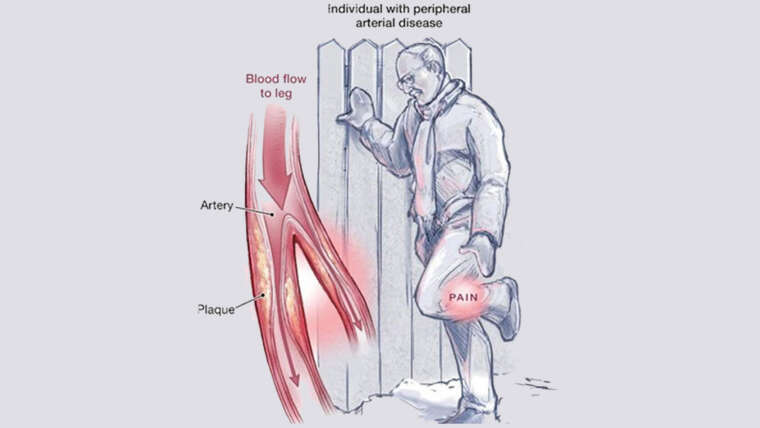
It is a group of diseases in which arteries are thickened and lose their elasticity. This can also be called as “hardening of arteries”. The most important type of arteriosclerosis is atherosclerosis. In atherosclerosis, fatty material (bad cholesterol) and fibrous tissue accumulate inside the arterial walls. The diameter of the artery decreases, leading to a reduced flow of blood supply to the tissue. This is called stenosis.
If this narrowing happens in an artery leading to the heart, you experience pain in the chest which is one of the initial symptoms of a heart attack. Blood flow then reduces and tissues slowly begin to die due to lack of oxygen. The heart stops beating and the person dies.
However, if arteries in the upper and lower limbs (arms/legs), the narrow person experiences pain after exercise/work (claudication) or even at rest (rest pain). In case of complete blockage of blood flow to limbs, the tissues will die to loss of oxygen which is called gangrene. This eventually leads to amputation (cutting of dead tissues/gangrene) of the arm/leg to save the patient’s life.
Similarly, if vessels supplying to the brain are reduced or narrow, a small portion of brain tissue dies leading to brain attack/stroke/paralysis.
Thrombosis:
It describes the presence of a blood clot (thrombus) attached to the inner (intima)wall of vessels (arteries/veins).which leads to complete blockage of blood flow to supplying body tissue and creates similar problems described above.
Embolism :
The blood flow of vessels is sometimes obstructed by small particles (embolus) of fat, air, or blood clot and is called an embolism.
Important- the point of obstruction can be very far from where the embolus originates. For example, a thrombus formed in the leg veins can travel to the lungs creating a life-threatening situation or a clot can travels from the heart or major blood vessels (Aorta) to the leg, completely blocking the artery and leading to gangrene.
Dilatation of blood vessels
Blood vessels are constructed in layers made up of tissues, strengthening and preserving the integrity of vessels.
Certain conditions such as hypertension, atherosclerosis, trauma, or infection can disrupt the integrity of vessels. As a result vessel’s wall gets weak and vessels bulge out this is called an aneurysm. As age advances, this aneurysm is enlarged in size and leads to vessels rupturing leaking blood out of vessels (hemorrhage). This affects blood flow to important body organs and tissues creating life-threatening problems
Q. What are risk factors?
A. Diabetes, Smoking, Eating food high in fats, High blood pressure, Age, Hereditary.
Q. What are the symptoms of a leg attack?
A. Peripheral artery disease is silent in its early stages but walking even a short distance becomes painful for patients as it worsens. This pain is relieved by rest and reappears on walking. This cycle of walk-pain-rest-walk-pain-rest is the first warning sign of arterial blockage and is called a leg attack.
Other symptoms of the disease as it progresses in limbs
Legs and feet become cold and numb
Blue/black/red discoloration of fingers and toes
Numbness, tingling, or pain in arms, leg, foot, or toes.
Paleness of foot or leg on elevation
Dry, fragile, or shiny looking skin
Wounds and ulcers refusing to heal
Symptoms of disease as it progresses in the Brain
Sudden temporary weakness or numbness of the face, arm, and/or leg on one side of the body
Temporary loss of speech or trouble speaking or understanding speech
Unexplained dizziness, unsteadiness, or sudden fall
Temporary dimness or loss of vision particularly in one eye.
Important: An early diagnosis and treatment can prevent cutting leg (amputation) and paralysis (brain stroke).
Q. What if no treatment is received?
A. Any disease if not treated at the initial stages becomes increasingly complicated to manage. When the disease becomes incurable doctor might suggest amputation of the arm/leg or you may sustain a stroke leaving part of your body paralyzed.
Q. How to initiate treatment?
A. If you have one of the symptoms mentioned above contact your doctor or vascular surgeon. If vascular problems are suspected, your doctor may order a Doppler scan (ultrasound) or angiography. Based on reports further treatment or even bypass surgery may be needed to improve blood flow. Similar to the heart attack that requires angioplasty or bypass, similar treatment may be needed for vascular disease.
Q. What is angiography?
A. It is imaging of the vascular system of the body using X-rays. Vessels are not visible normally hence special dye (contrast agent) is injected into the blood.
It is available in different forms like CT angiography, MR angiography, and Digital Subtraction Angiography (DSA). In this process, dye is injected inside the body through a small injection in the groin with help of a wire and plastic tube (guidewire and catheter). This dye flows through blood vessels and same time X-rays are taken to delineate blood vessels. DSA is similar to coronary angiography (CAG) performed for knowing obstruction in blood vessels of the heart.
Q. Can vascular disease be completely cured by medicine?
A. No. Medicine can control the disease but can’t root it out.
Q. What are various treatment options available?
A. Bypass surgery:
Surgery is the time-tested and well-established treatment of blocked arteries. This is performed by a vascular surgeon with help of the patient’s vein or artificial tubes made up of synthetic materials. Blood will flow through the newly established track bypassing obstructed vessels carrying essential nutrients and oxygen and thus preventing stroke or amputation.
Surgery also can be done in forms like endarterectomy which means the removal of the diseased inner layer of the artery. Embolectomy and thrombectomy are terms employed to remove blood clots from arteries or veins to save the leg and arm from amputation.
Endovascular surgery:
It is the name given to minimally invasive percutaneous surgical intervention. This involves correction of blockage or aneurysms either with small catheters and wires placed through a needle puncture in arteries or through small incisions. These procedures require a small period of hospitalization and a quick return to the daily routine. All arterial blockages are not amenable to this strategy and need careful patient selection. The cost of these procedures is high in comparison to bypass surgery. Balloon angioplasty, Stenting, Endovascular aneurysm repair (EVAR & TEVAR) and Catheter-directed thrombolysis (CDT) is some of the endovascular procedures vascular surgeon performs routinely.
Q. What is balloon angioplasty?
If blood vessels have become very narrow, the vascular surgeon will push the balloon catheter ( catheter which has a balloon at the tip) across the obstruction site. This balloon is inflated to rupture/break hard plaque and thus re-establish circulation. This procedure is called Percutaneous Transluminal Angioplasty (PTA), percutaneous through the skin, transluminal across vessels, and angioplasty shaping of blood vessels.
Q. What is a stent?
The stent is a tube made up of metallic wires, which lend support to blood vessels and is placed by endovascular approach with help of catheters and guidewires.
Q. When the stent is needed?
As blood vessels become narrower, sometimes they lose their elasticity. In such scenarios even after angioplasty, a blood vessel doesn’t remain open and collapses back to its previous narrowed size. In these cases, stents are deployed to prevent the collapse of vessels wall to maintain the integrity of blood flow.
Q. Will these symptoms recur?
Yes, if instructions are not followed properly with medications. It also can occur in different locations like opposite legs or arms.
Reducing risk factors:
- Quit smoking
- Regular exercise
- Proper foot care
- Regular medications
- Healthy diet
The peripheral arterial disease doesn’t go away. Although angioplasty and stenting may improve blood flow from diseased arteries, they cannot cure the disease. The only patient has the power to slow disease progression and is done with things mentioned above.